Annual Fire Safety Statements · Sydney NSW

Annual Fire Safety
Statement (AFSS).

Get your Annual Fire Safety Statement organised without the runaround. From reviewing your Fire Safety Schedule through assessment and statement preparation, we help make the AFSS process clear and straightforward.

GET YOUR AFSS QUOTE Takes about 2 minutes
+61
  • Appropriately accredited practitioners for the relevant assessment functions
  • NSW-focused — built around current NSW AFSS requirements
  • Clear process — know what happens at every stage
01 / Got your AFSS?

Pick the starting
point that matches
your paperwork.

Wherever you are in the process, you'll land on the same guided quote. Choose what fits today, you can always come back later.

02 / HOW IT WORKS

From your documents
to your AFSS.

A clear process from understanding your building's requirements through assessment and preparation of the Annual Fire Safety Statement.

  1. Start with
    your documents

    Upload your AFSS or Fire Safety Schedule to identify your building requirements.

  2. Confirm your
    building details

    Confirm the property address and building details to keep everything correctly linked.

  3. Assess required
    fire measures

    Assess each applicable fire safety measure against the standards for your building.

  4. Address identified
    compliance issues

    Address any identified compliance issues before your AFSS can be properly completed.

  5. Prepare your
    final AFSS

    Prepare the AFSS using completed assessments and verified information for your building.

03 / WHAT IS AN AFSS?

What is an Annual
Fire Safety Statement?

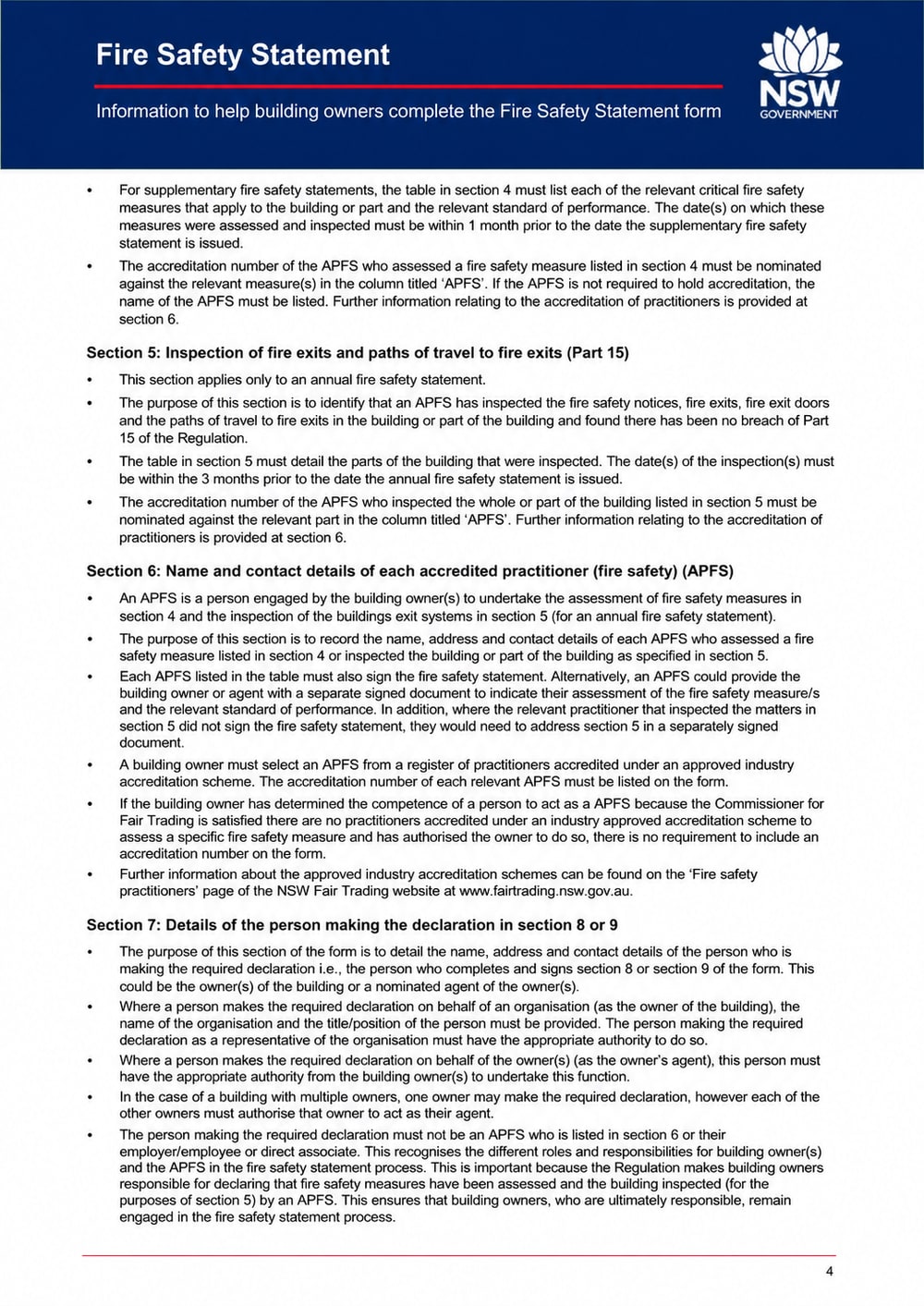
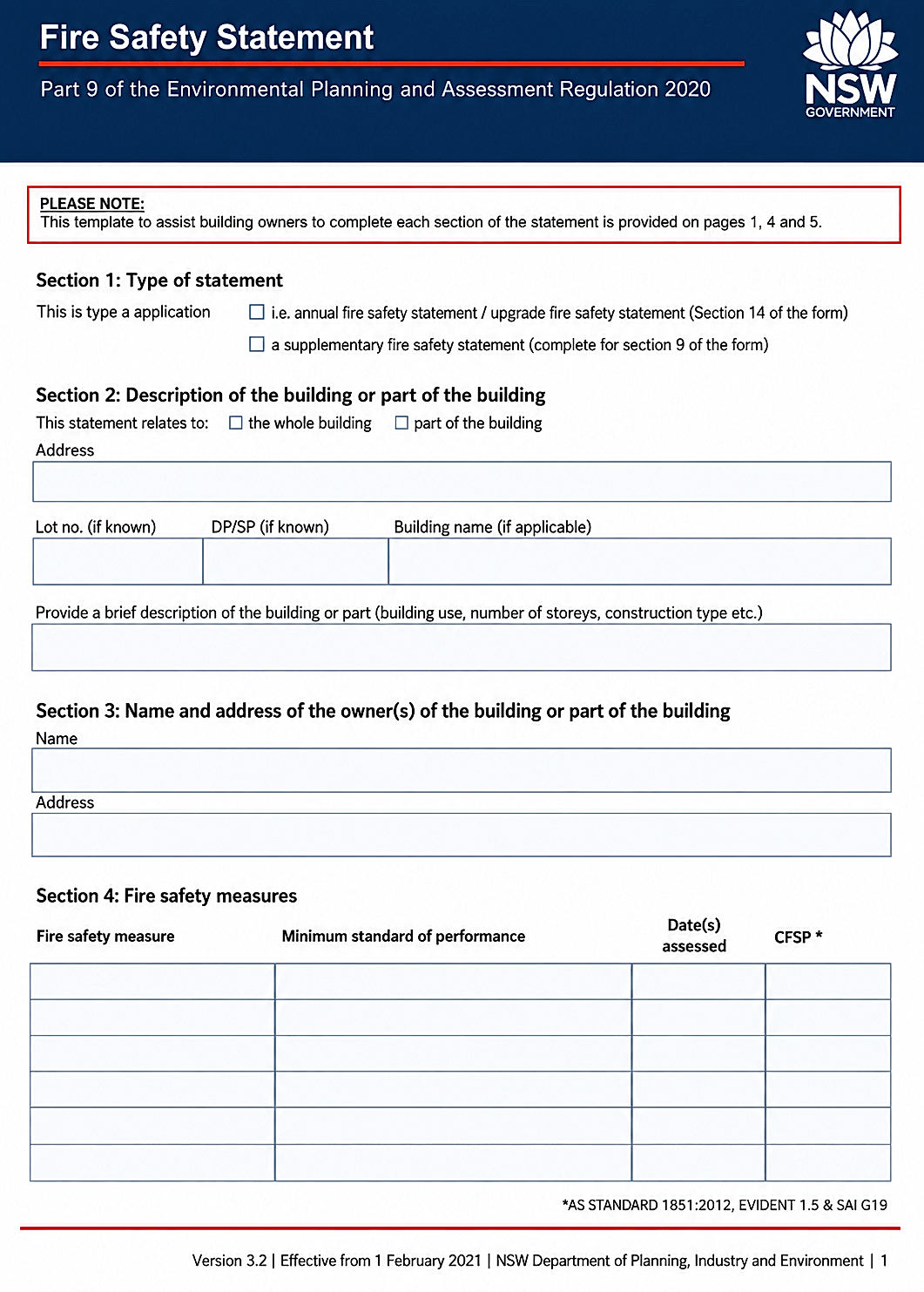
An Annual Fire Safety Statement (AFSS) is a statement issued by or on behalf of a building owner confirming that the applicable essential fire safety measures have been assessed and that the required inspection and assessment requirements have been completed.

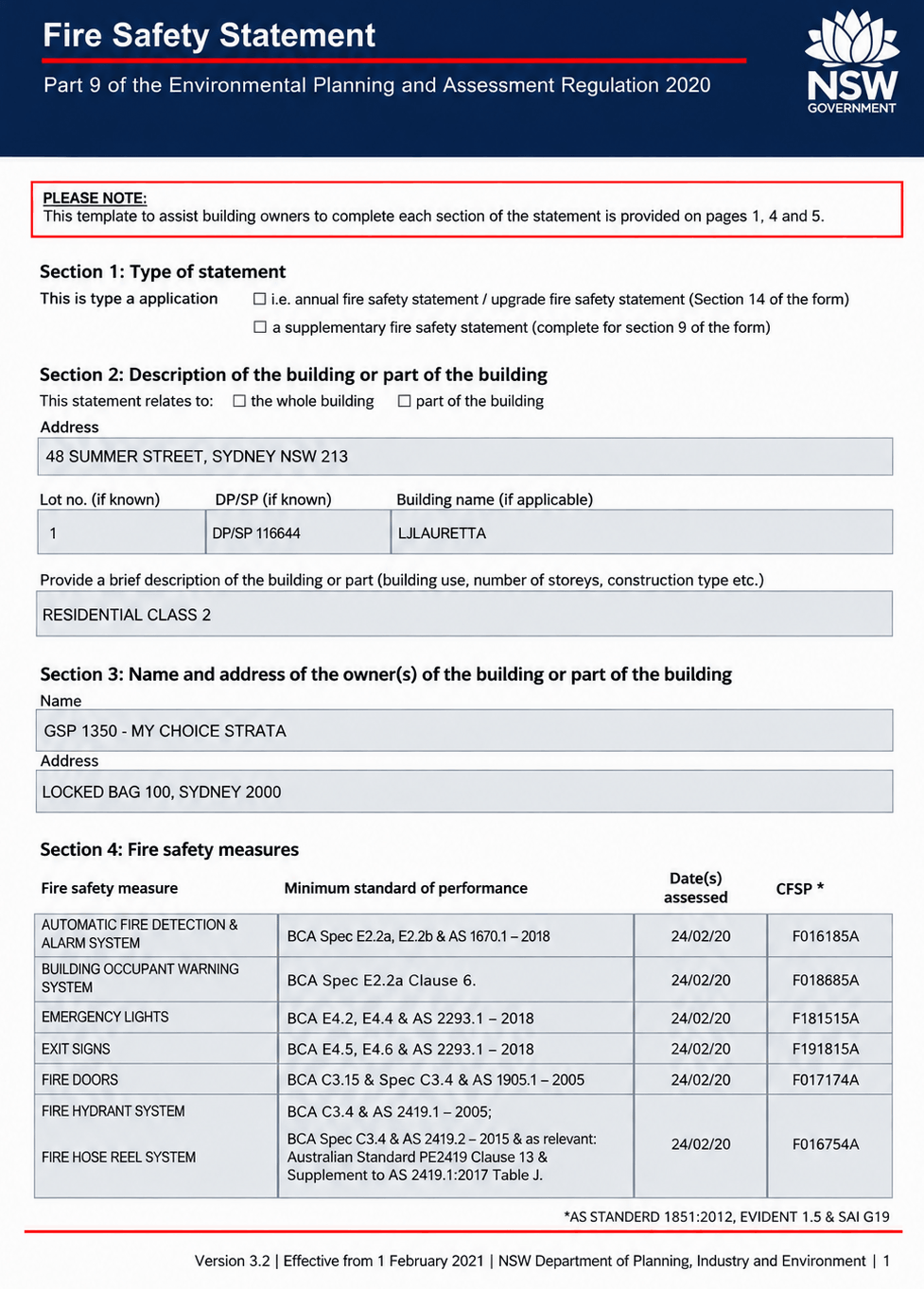
Sample NSW Annual Fire Safety Statement
01

For existing buildings

Annual Fire Safety Statements relate to applicable essential fire safety measures in existing buildings where a Fire Safety Schedule or other applicable fire safety requirements apply.

02

Who it applies to

The owner of the building to which the measures apply, or an authorised agent acting on the owner's behalf.

03

How often

Generally every 12 months, for the current year. It must be submitted to council before the due date.

04

Based on the Fire Safety Schedule

The Schedule identifies the measures and minimum standards of performance that apply to the building.

05

Who performs the assessment

Where the relevant function is covered by an approved accreditation scheme, the assessment is performed by an appropriately accredited practitioner for that function.

06

Who is responsible

The building owner is responsible for ensuring the required AFSS is issued and provided within the required timeframe.

AFSS keeps your building compliant and people safe.

Stay up to date, meet your obligations and maintain a safe environment for everyone.

Learn more
04 / SAMPLE AFSS

See what a real
AFSS looks like.

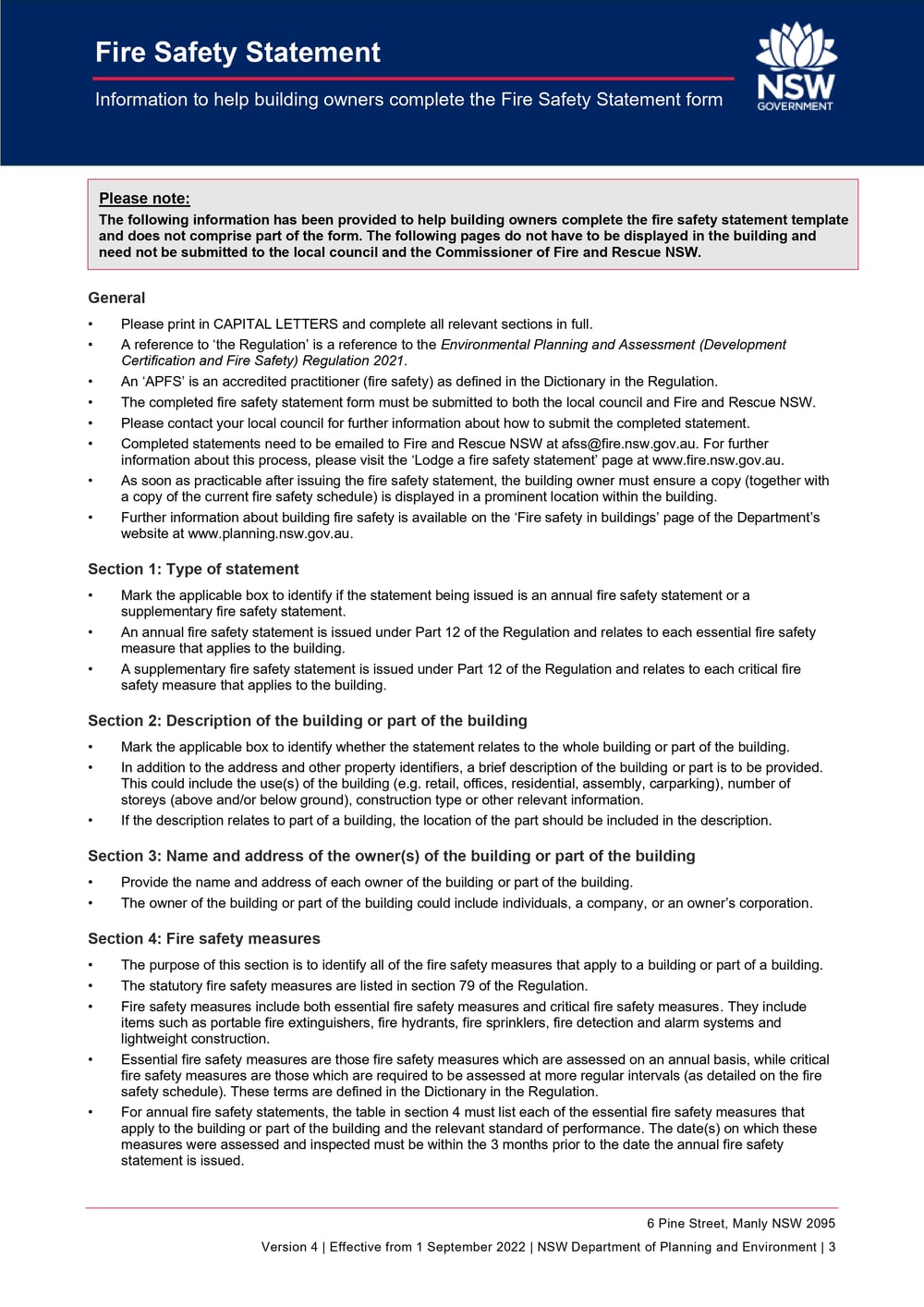
Every Annual Fire Safety Statement we issue follows the strict requirements of the Environmental Planning and Assessment (Development Certification and Fire Safety) Regulation 2021.

  • Verified by accredited practitioners

    Completed by NSW Fire Safety Assessors in accordance with AS 1851-2012.

  • Detailed and transparent

    Each statement lists all essential fire safety measures and their compliance status.

  • For building owners and council

    Accepted by councils and Fire and Rescue NSW as part of your annual compliance.

05 / DOES MY BUILDING NEED AN AFSS?

Does my building
need an AFSS?

An Annual Fire Safety Statement (AFSS) is generally required for NSW buildings where essential fire safety measures apply.

Strata / apartment buildings

Residential buildings where essential fire safety measures apply.

Commercial buildings

Offices, business premises and corporate properties, depending on the building's approvals and applicable fire safety measures.

Industrial properties

Warehouses, factories and industrial sites where applicable measures are identified.

Retail properties

Shops, supermarkets and shopping centres, subject to applicable fire safety requirements.

Mixed-use developments

Buildings combining residential, retail or commercial uses, each assessed against its applicable measures.

Other applicable buildings

Any existing building in NSW with applicable essential fire safety measures.

the same quote journey.
06 / WHAT THE INSPECTION INVOLVES

More than a paperwork check.

An AFSS assessment is more than a paperwork check. The applicable fire safety measures identified on the Fire Safety Schedule need to be assessed against the required standard of performance for your building.

01

Review the Fire Safety Schedule

Identify the essential fire safety measures and minimum standards of performance that apply to the building.

02

Inspect applicable measures

Relevant fire safety measures are inspected and assessed by appropriately accredited practitioners where the relevant accreditation scheme applies.

03

Check performance

Each applicable measure is assessed against the required standard identified for the building.

04

Identify issues

Any measure that does not meet the required standard is identified for attention.

05

Record the assessment

Assessment dates, practitioner details and relevant results are recorded for the AFSS process.

06

Prepare the statement

Once the applicable assessment requirements are satisfied, the information can support preparation of the Annual Fire Safety Statement.

it and get started.
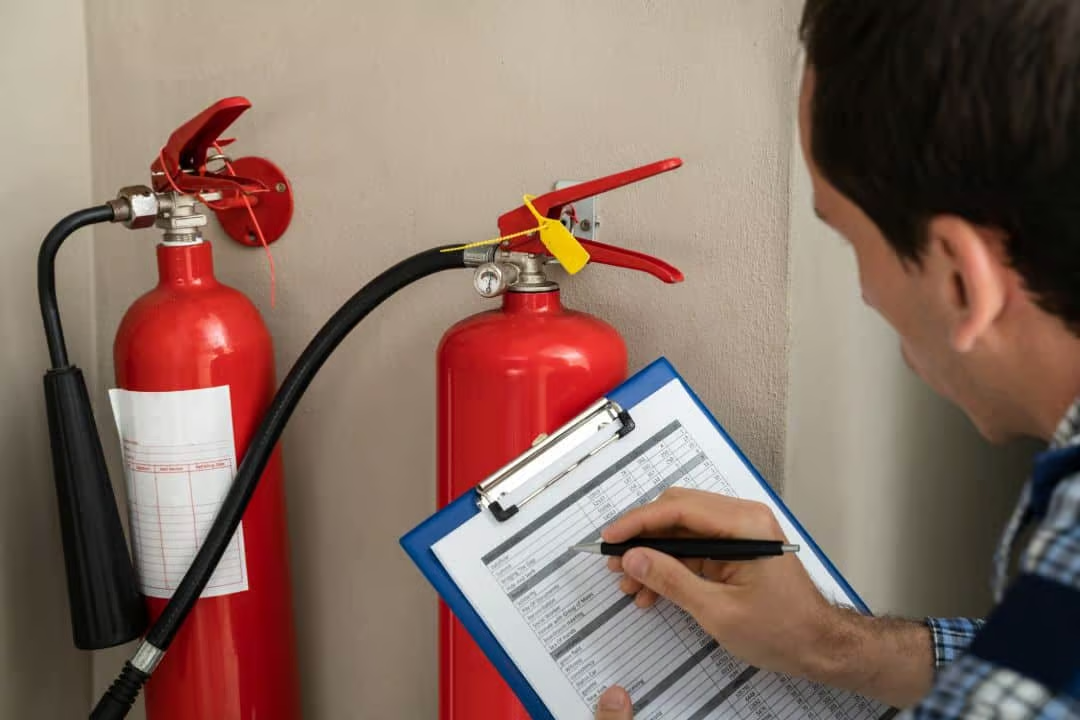
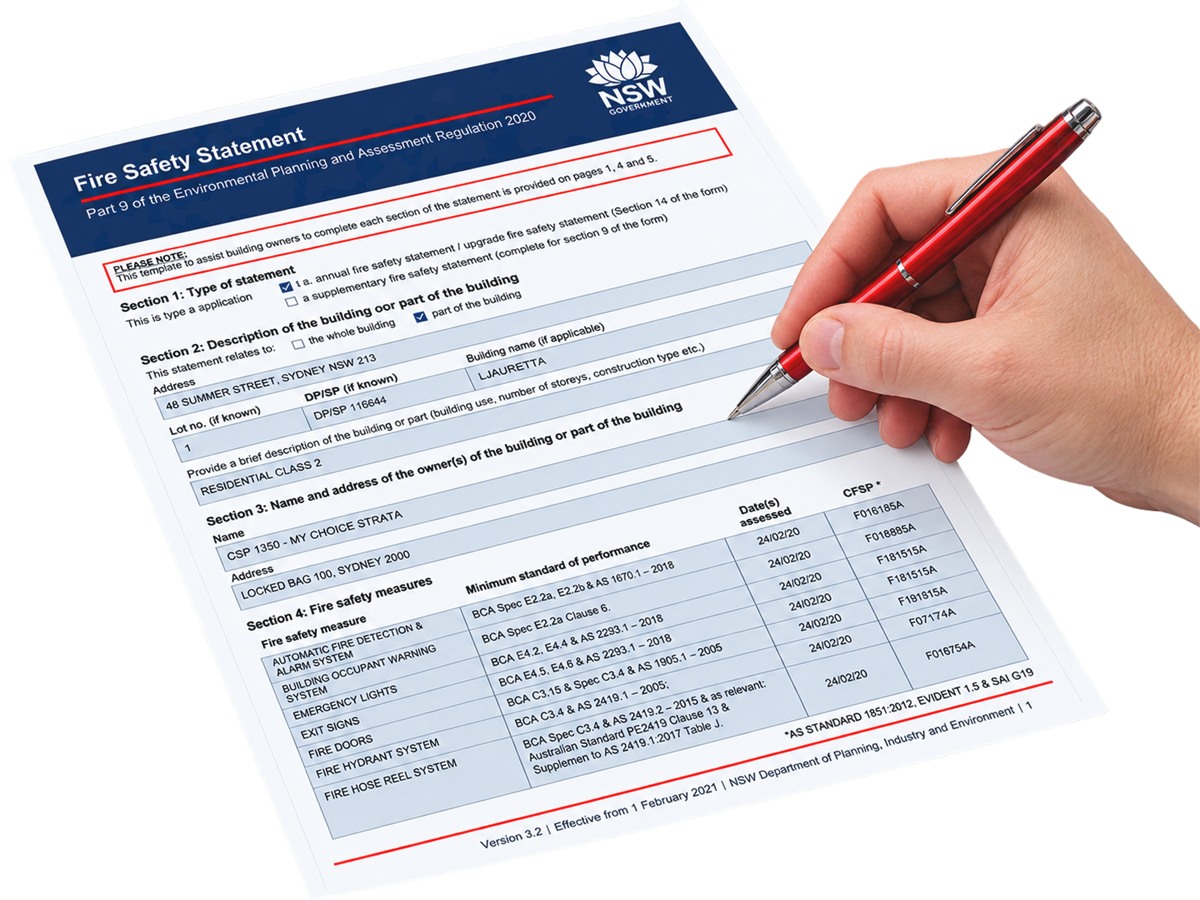
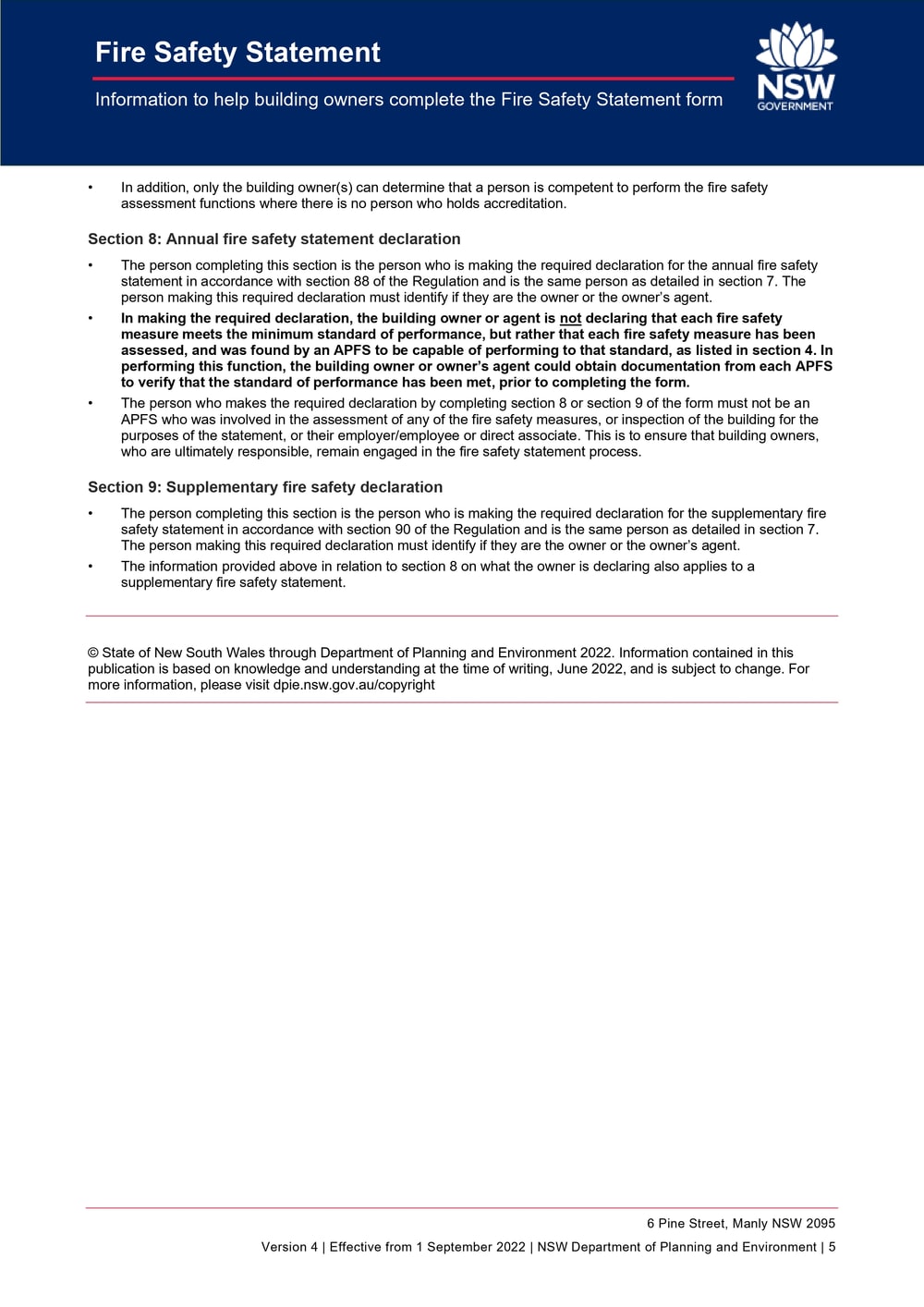
Hand writing on Fire Safety Statement form
07 / WHAT GETS ASSESSED?

What gets assessed?

Your Fire Safety Schedule — or other applicable fire safety requirements — determines which measures apply to your building. Common categories include:

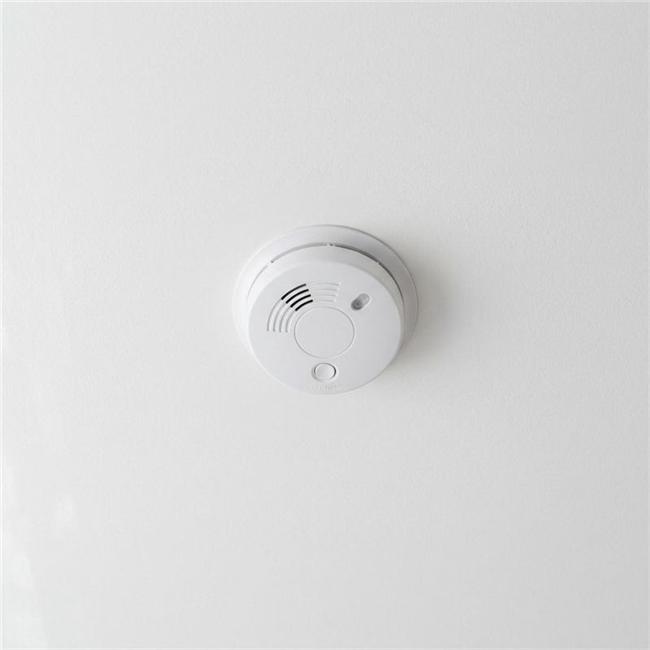
Fire detection and alarm systems
01

Fire detection
and alarm
systems

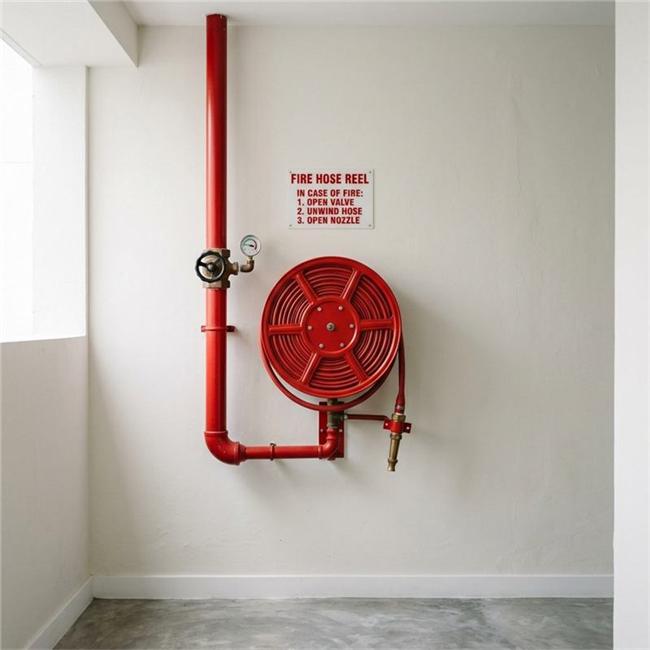
Fire hydrants / hose reels
02

Fire hydrants /
hose reels

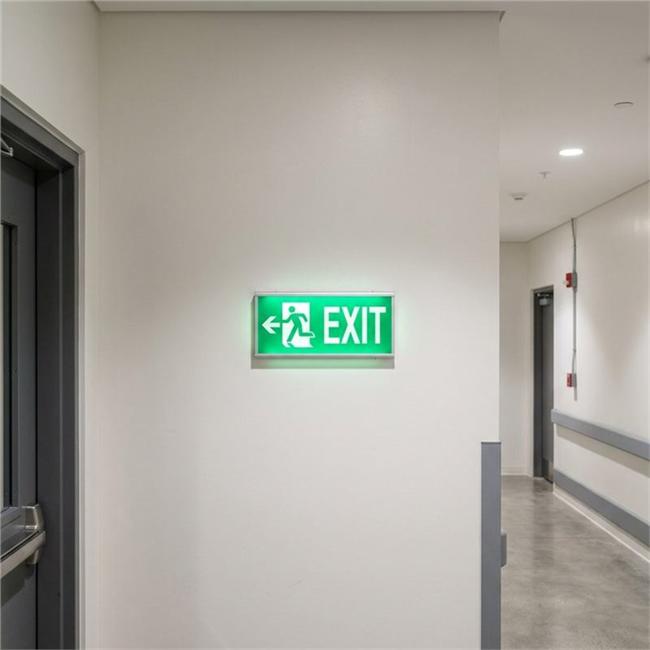
Emergency lighting and exit signage
03

Emergency
lighting and
exit signage

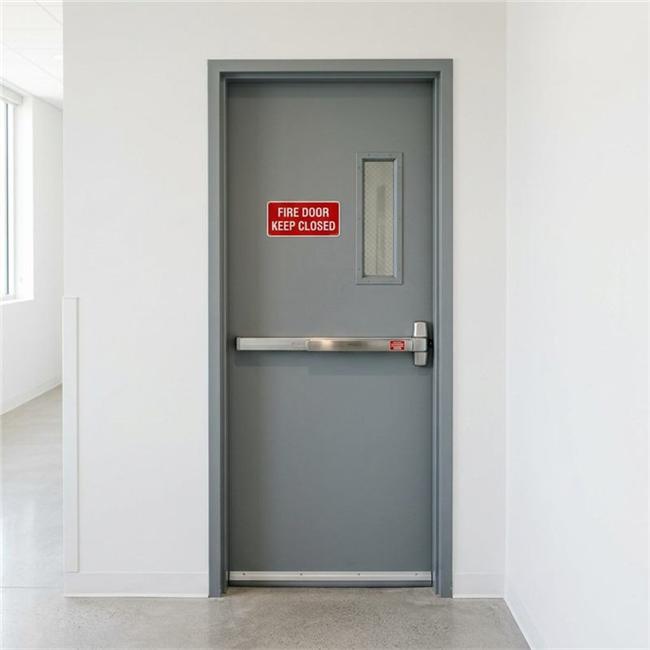
Fire doors / smoke doors
04

Fire doors /
smoke doors

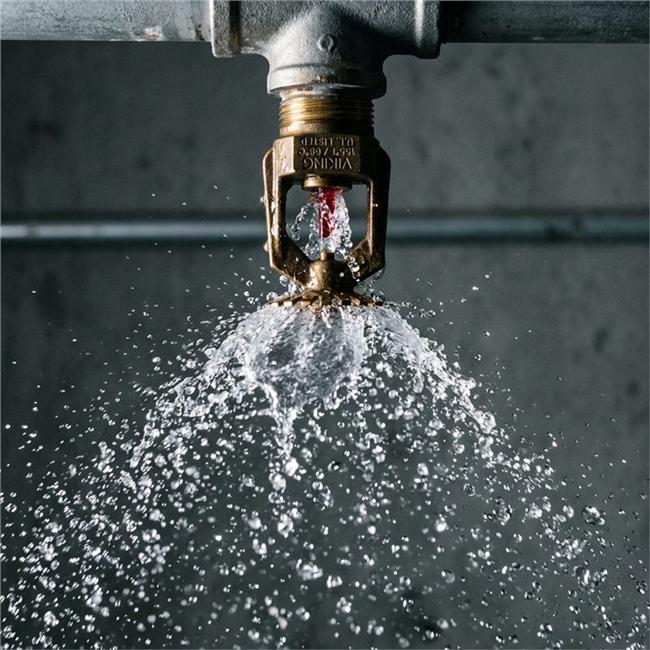
Sprinkler systems
05

Sprinkler
systems

Passive fire measures
06

Passive
fire measures

These are examples only — not every building has every measure. The applicable measures and standards for your building are identified in your Fire Safety Schedule or other applicable fire safety requirements.

08 / DUE DATE & PENALTIES

Your AFSS is
due every year.

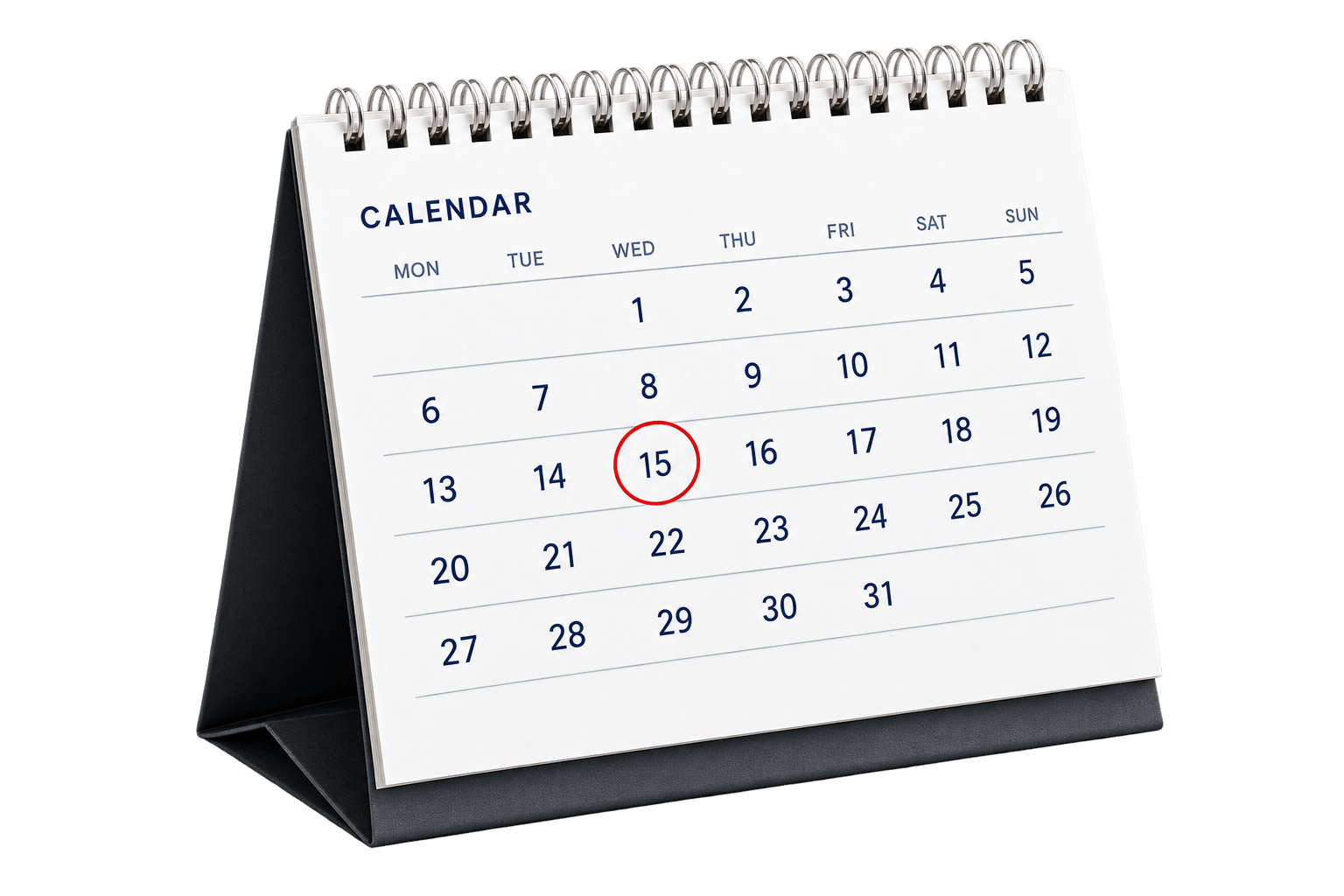
Annual Fire Safety Statements are generally required every 12 months. Knowing your due date gives you time to organise assessments and address any issues before the statement is due.

Calendar

LATE OR MISSING AFSS

Failing to provide an Annual Fire Safety Statement within the required timeframe can result in escalating penalties. Each week of continuing non-compliance may constitute a further offence under the legislation provisions.

Penalty units for a Fire Safety offence may vary for a failure to give an Annual Fire Safety Statement to the local council:

FIRST WEEK $1,100
SECOND WEEK $2,200
THIRD WEEK $3,300
FOURTH & EACH
SUBSEQUENT WEEK
$4,400

09 / ACCREDITED PRACTITIONERS

The right scope.
The right assessment.

The applicable fire safety measures identified on your Fire Safety Schedule must be assessed by appropriately accredited practitioners where an approved accreditation scheme covers the relevant assessment function. The practitioner's accreditation should cover the function relevant to the measure being assessed.

Check practitioner accreditation
  • The right scope.

    The Fire Safety Schedule identifies which measures apply to your building and the standard they must meet.

  • The right accreditation.

    Where the assessment function is covered by an approved accreditation scheme, the work must be performed by an appropriately accredited practitioner for that function.

  • The right status.

    Verify a practitioner's current accreditation on the public register before engaging them.

10 / KNOW YOUR DOCUMENTS

Three documents.
Three different jobs.

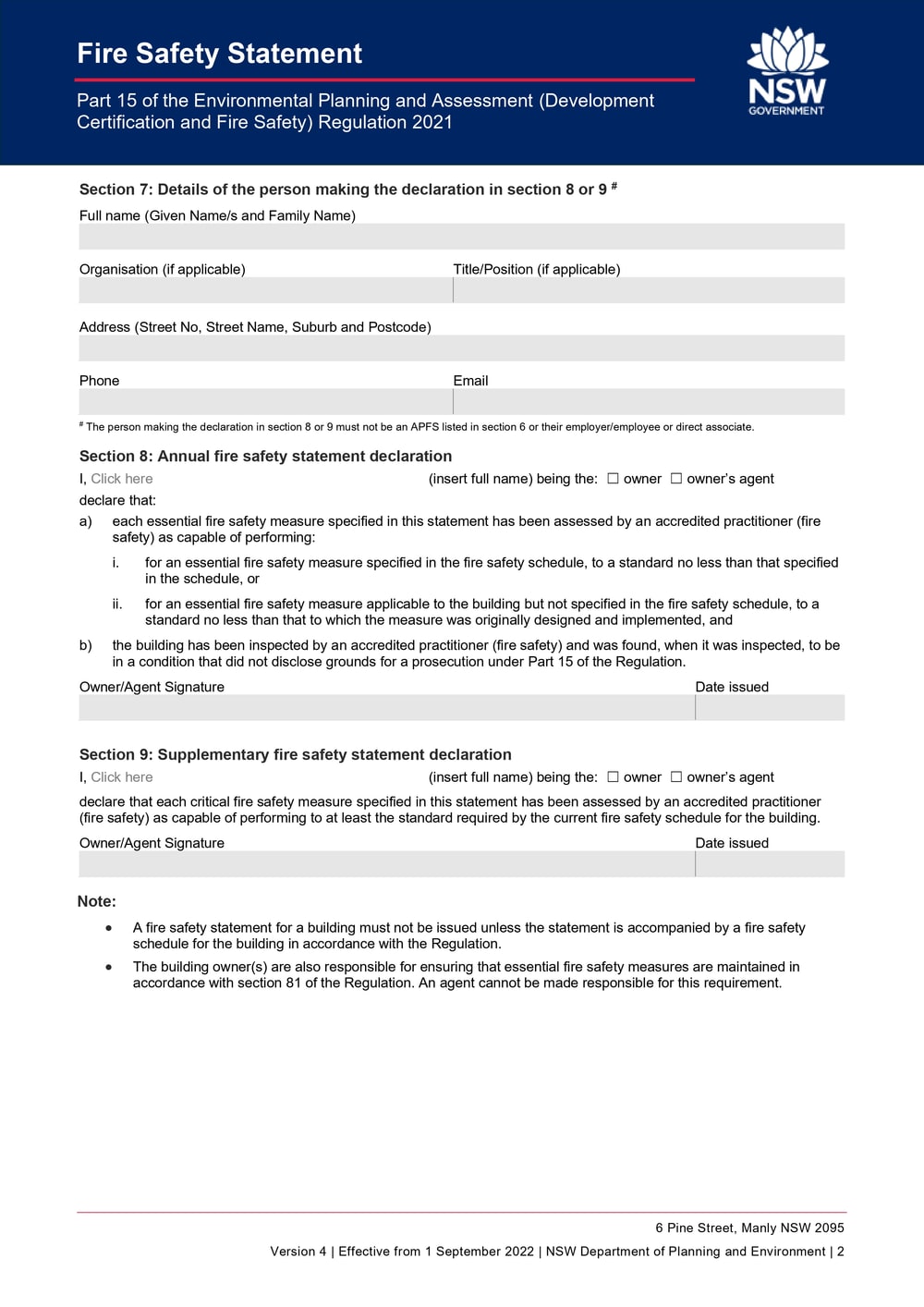
It's easy to mix them up. Here's how each NSW fire safety document works, and when you need it.

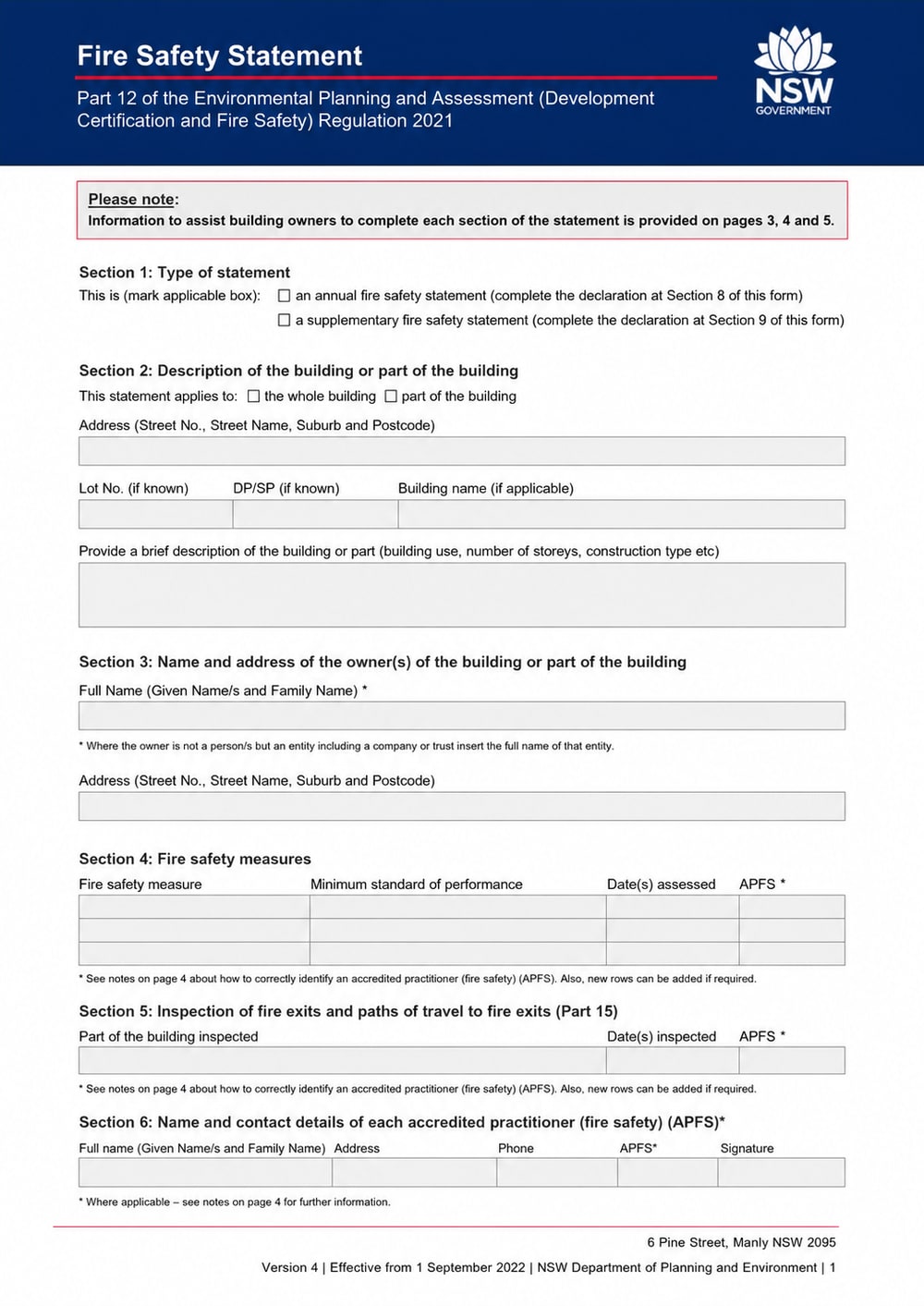
Sample NSW Annual Fire Safety Statement
01

Annual Fire Safety Statement (AFSS)

The annual statement.

Annual document confirming the applicable essential fire safety measures in your building have been assessed, inspected and verified for the current year.

View official template
Sample NSW Fire Safety Schedule
02

Fire Safety Schedule (FSS)

The requirements for your building.

Lists the essential fire safety measures that apply to your building and the minimum standards of performance each measure must meet.

View official template
Fire Safety Certificate
03

Fire Safety Certificate (FSC)

For relevant new or altered building work.

Issued for relevant new or altered building work. It confirms that the applicable fire safety measures have been installed and checked against the requirements of the Fire Safety Schedule.

View official template
Fire safety maintenance — routine inspection of NSW building systems
13 Feb 2026

Mandatory maintenance requirements commenced in NSW.

11 / AS 1851-2012

Fire safety maintenance
changed in NSW.

From 13 February 2026, applicable NSW buildings must maintain essential fire safety measures in accordance with AS 1851-2012 where the Standard applies to the building.

  • INSPECT
  • TEST
  • MAINTAIN
  • KEEP RECORDS

AS 1851-2012 and your AFSS are related, but they are different requirements.

AS 1851-2012 covers routine servicing and maintenance of applicable systems throughout the year. The AFSS is a separate annual assessment and statement process.

Understand AS 1851-2012
12 / PROJECTS

AFSS projects.

From strata complexes to industrial facilities, we help building owners stay compliant and safe year after year.

13 / CLIENTS

Working with the
people behind safer buildings.

AFSS compliance can involve building owners, strata managers, property managers, facilities teams, accredited practitioners and specialist fire safety professionals.

14 / TESTIMONIALS

What our clients say.

Approved reviews from building owners and managers we have worked with.

AFSS provided a thorough, professional service with clear communication at every step. Their reports were easy to understand, well-structured and delivered on time, making compliance simple and stress-free.
James Mitchell
Facilities Manager
Riverside Strata Complex | Inner West, Sydney NSW
Property review image

Their team is knowledgeable, responsive and proactive in identifying risks before they become issues. I highly recommend them for any building compliance needs.

Sarah Lee
Building Manager
Sydney CBD Office Tower
Sydney CBD, NSW
15 / FAQ

Looking for answer?

The questions NSW property owners and managers ask us most often about Annual Fire Safety Statements.

An Annual Fire Safety Statement (AFSS) is a statement issued by or on behalf of a building owner confirming that the applicable essential fire safety measures have been assessed and that the required inspection and assessment requirements have been completed. It applies to relevant existing buildings in NSW where essential fire safety measures apply.

The building owner is responsible. In practice, the owner (or their agent) engages appropriately accredited practitioners to assess the applicable measures, then arranges for the Annual Fire Safety Statement to be issued and provided as required.

Generally every 12 months. Your building's Annual Fire Safety Statement is issued each year based on the applicable measures identified on your Fire Safety Schedule or other applicable fire safety requirements.

Failing to provide an Annual Fire Safety Statement within the required timeframe can result in escalating penalty notices from council. Each week of continuing non-compliance may constitute a further offence. Refer to current NSW legislation and your local council requirements for the position that applies to your building.

No. The AFSS service fee covers the Annual Fire Safety Statement service itself. If the assessment identifies repairs, rectification work, additional testing or other services that are required, those works are quoted separately.

Annual Fire Safety Statement FAQ